Comment les mots et les phrases sont-ils comptés ?
Quand le navigateur supporte Intl.Segmenter, nous utilisons les limites de mots et de phrases propres à la locale. Sinon un repli regex Unicode divise les jetons.
Arrêtez de deviner si votre texte respecte les limites ou conversionne : voyez le nombre de mots, les signaux SEO du titre et méta, le rythme et la densité de mots-clés, puis affinez vos brouillons avec vérification grammaticale et Gemini AI.
Your text might contain writing issues
Powered by LanguageTool (via our server). Suggestions are automated—not a substitute for a human editor. Text is sent only for checking and is not stored by Trust Tool.
Unicode-aware word and sentence segmentation when your browser supports Intl.Segmenter; regex fallback otherwise.
Flesch-style scores run when the page locale is English (heuristic syllable model). Switch to English or use other metrics above for non-English copy.
First line length models a title tag; the meta preview uses the first 160 characters of your text flattened to one line (illustrative, not a crawler preview).
Green band ~50–62 characters (common SERP title range).
Green band ~150–160 characters (typical meta description window).
Sentence length mix: higher rhythm score means more variety between short and long sentences (entropy-based).
Percent = share of counted tokens. Toggle stop words for English to surface meaningful terms.
| Word | Count | Density % |
|---|---|---|
| No tokens to rank yet. | ||
This tool is designed as a complete writing control panel, not just a simple counter. Follow this sequence to get the strongest results from every draft:
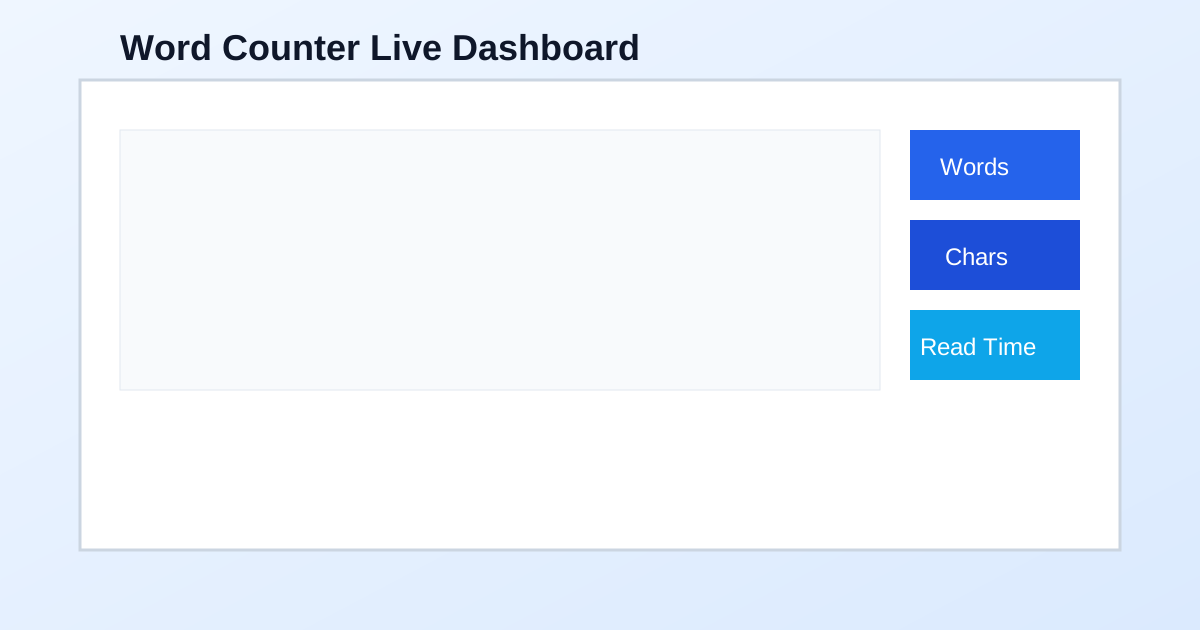
Type or paste text here
Paste your draft into the main editor. Metrics update live as you write.
Run check
Launches grammar and spelling analysis. Issues are highlighted directly in context.
Apply all suggestions
Applies available grammar replacements in one pass for quick baseline cleanup.
Improve Writing
Uses Gemini to rewrite for clarity, flow, and stronger readability.
Fix Grammar
Uses Gemini for correctness-focused proofreading with minimal style drift.
Make it SEO-friendly
Uses Gemini to reframe structure and phrasing for better search intent alignment.
Select all and Copy
Select and copy the current full editor content instantly.
Clear
Resets the editor for a new draft.
Load demo text
Inserts sample content for quick testing.
Copy summary and Copy stats JSON
Export a concise report or structured data for workflows, QA, and handoffs.
A professional word counter does much more than counting words. It helps you evaluate depth, readability, keyword distribution, and publishing readiness before your content goes live. If your editorial process depends on quality and speed, these metrics should be part of every revision cycle.
Whether you publish blog posts, landing pages, product copy, reports, or technical documentation, this word counter gives immediate feedback so you can make high-confidence decisions early, not after multiple review rounds.
Search engines do not rank by length alone, but word count strongly correlates with topical depth. Thin pages often fail because they leave intent unanswered, while well-structured long-form pages tend to earn stronger engagement and better ranking durability.
A disciplined word counter workflow helps you match length to intent:
For technical and data-backed topics, internal links improve topical authority. Relevant references include Loan Calculator and Investment Calculator, especially when your article includes scenarios with numbers, projections, or comparison logic.
A strong word counter also protects your search snippet quality:
Most CMS interfaces do not reliably block overlong snippets. Running your metadata through a word counter before publishing is a low-effort habit that improves click-through consistency.
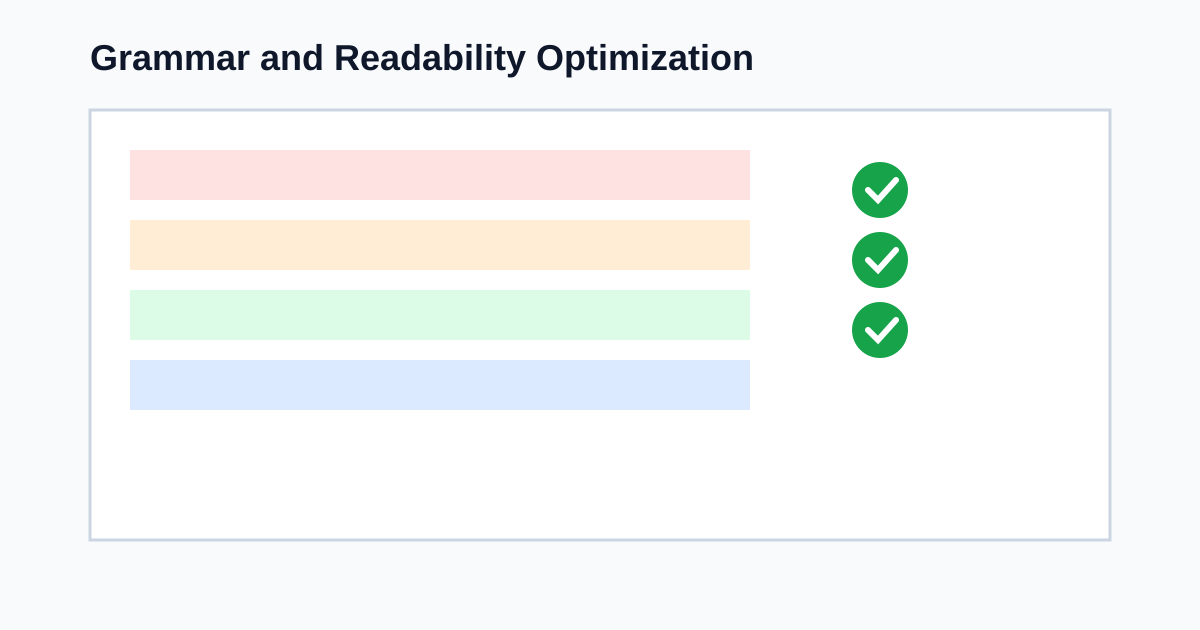
Content can be accurate and still underperform when reading friction is high. Long unbroken paragraphs, overly dense syntax, and repetitive sentence patterns increase cognitive load and reduce retention.
Use your word counter metrics to enforce readability standards:
For health and educational content, combine readability discipline with context accuracy by linking to useful tools such as the BMI Calculator. This strengthens both user experience and internal topical structure.
Keyword density should act as a quality signal, not a repetition target. A trustworthy word counter helps you find balance:
Use the primary keyword naturally in high-value positions (title, opening, key headings, image alt, conclusion), then support it with contextual language. This produces durable SEO outcomes compared with forced exact-match repetition.
Use this repeatable process with your word counter to reduce revision cycles:
This loop improves speed while preserving control. Each stage has a clear purpose, which makes collaboration easier across content, SEO, and review teams.
Treat these as planning ranges, not fixed rules. Your word counter should be used together with intent analysis and competitor benchmarking for the specific query you target.
Internal links do more than improve navigation. They strengthen crawl paths, reinforce semantic relationships, and guide users into deeper sessions. In content clusters, this can materially improve engagement and indexation quality.
For this tool, a practical internal-link map includes:
A strategic word counter article should include internal links where they add real reader value, not only for crawler signals.
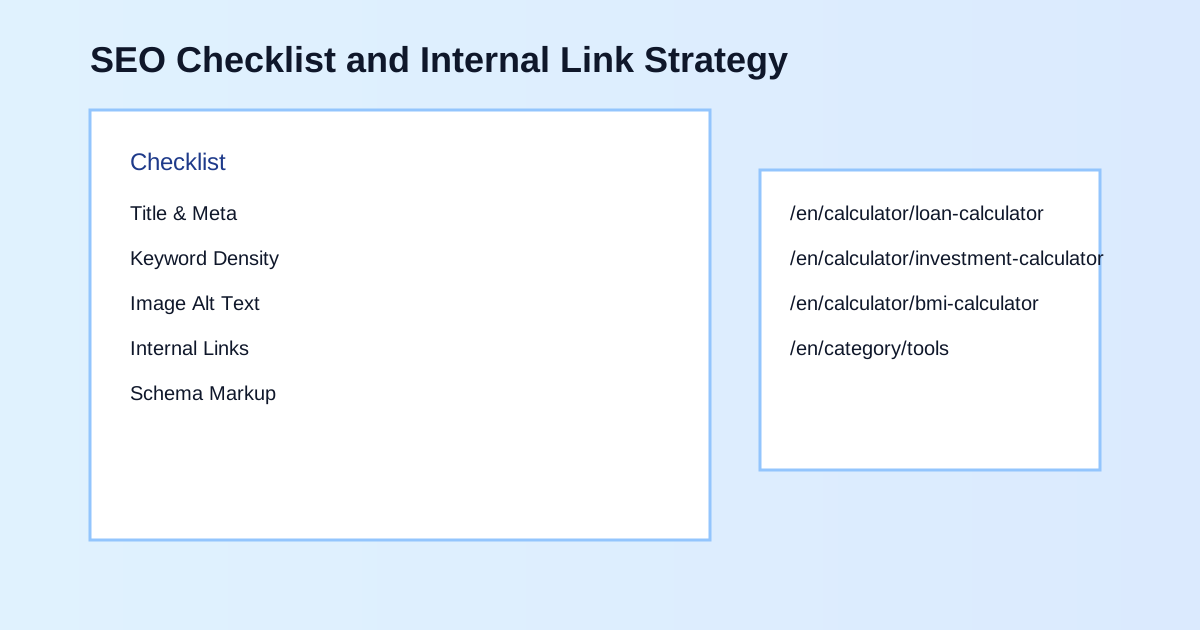
Use this checklist before publishing (major groups first, then detail items):
The best word counter workflow combines measurement, correction, and optimization in one place. When you consistently run metrics, grammar checks, AI refinement, and SEO checks before publishing, content quality rises while review time falls.
If your goal is to publish faster without lowering standards, use this word counter as a mandatory pre-publish quality gate.
Quand le navigateur supporte Intl.Segmenter, nous utilisons les limites de mots et de phrases propres à la locale. Sinon un repli regex Unicode divise les jetons.
Nous classons chaque phrase par nombre de mots. Le score récompense un mélange de longueurs — similaire à la vérification de monotonie — en utilisant une mesure simple de diversité.
Les règles de jetons, les listes de stop-words et la normalisation varient. Ici, vous pouvez exclure les stop-words anglais courants pour le tableau de mots-clés.
Non. L'analyse s'exécute dans votre navigateur ; rien n'est envoyé à nos serveurs. Collez et effacez restent sur votre appareil.
Non. Les bandes titre et méta sont des règles empiriques. Le rendu SERP réel dépend de l'appareil, de la langue et de la requête.
Votre texte est envoyé au moteur LanguageTool. Les résultats montrent les suggestions de grammaire, orthographe et style avec des corrections optionnelles.